
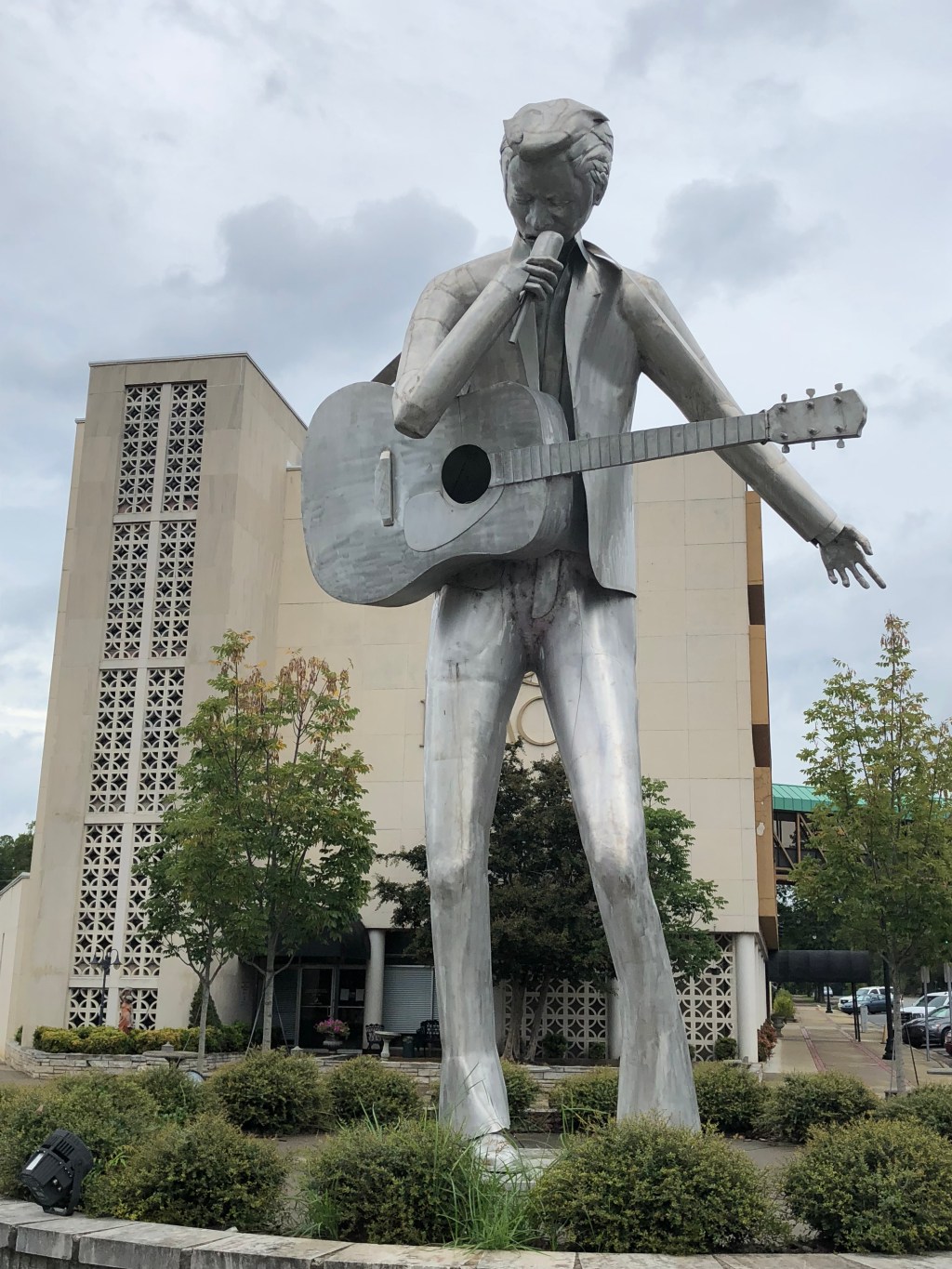
Muscle Shoals, Alabama! The pinnacle of my trip. I now deem it a pilgrimage to Muscle Shoals. The dream of going there was precisely what began the formation of this bucket list journey.
For any of you who have seen the Muscle Shoals music documentary and like rock or soul music, you completely understand what I mean! The most intriguing part to me in the documentary was the part where there is a discussion about how the Native American Indians called the area Nunnuhsae or the ‘Singing River’. There is a spiritual or magical shroud in that area that evokes a musically creative environment.
I was intrigued. Would I feel that same stir as a writer? That same inspiration as a music fan? The songs or the albums that came from that area! I promise you have listened to something that was either created or completely recorded there. Wilson Pickett, Aretha Franklin, the Rolling Stones, Percy Sledge, Cher, Paul Simon, Rod Steward – shall I continue?
The Shoals area is about four different small towns. The closest major city is Huntsville, Alabama about 1.5 hours away. It is remote. And yet, in its heyday, there were 12 active music studios. Currently there are 8. Not too bad though the locals and the musicians feel that is 4 too few.
I toured three different recording studios. Each with a deep and rich history. First on my tour was the 3614 Jackson Highway or the Muscle Shoals Sound Studio. Free Bird by Lynyrd Skynyrd. Started there. Kodachrome by Paul Simon. Recorded there. Wild Horses (one of my favorites) by the Rolling Stones. Recorded there. I’ll Take You There by the Staple Singers. Yep! Recorded there.
I saw some of the original instruments used, sat in the bar area where the Rolling Stones might have had a whiskey or 8. I saw the soundboard used to record the music and on and on! I stood where Paul Simon had booked three days to record one song and finished in 2 hours. He then took the remaining time and recorded 3-4 more songs.


There is a calm and a serenity for musicians and bands in Muscle Shoals. I did experience this. It is remote, away from the chaos and the distractions a city creates. My take was that the Muscle Shoals area allows for the pure ability to focus. I think the local folks also let the talent alone too. I am sure that is more than appreciated. And truthfully, one does have to wonder about the lore of the Singing River. The number of hits from that area, it is not that far fetched of an idea.
My next stop was Cypress Moon Studios. I had the unique opportunity to meet and talk with the owner, Tonya S. Holly. She and I instantly clicked. Tonya is the epitome of creative. She is a musician, songwriter, screen writer, film director, producer and poet.
Cypress Moon is actually the site for the old second location of the Muscle Shoals Sound Studio, i.e. it is right on the Tennessee River. It is a beautiful location with an exquisitely old building. I loved learning about how the site was an old Naval reserve. The history of this building was intriguing.
Even more curious is the recording history that occurred in that studio. Tonya told me the story of how Julian Lennon recorded Valotte in that studio. I instantly recalled the story of how he struggled with that song. He kept trying to sing that he was sitting on a rock playing his guitar. It wasn’t working. So he walked out of the studio and down to the river’s edge. He kept working on the lyrics. Eventually, the inspiration came to him “sitting on a pebble by the river playing guitar…” I always remembered that story because it was such a curious line. Pure poetry.
Tonya shared the names and songs of various musicians who graced the doorway before and since she owned the studio. Names like Etta James, Melissa Ethridge, Bob Seger, and the lists go on and on. She had a husband and wife duo recording while I was walking around the building.
At the Cypress Moon Studios, I could absolutely sense the calm, the serenity, the muse that is only that area. There is definitely something there. Perhaps it was the blue heron coasting barely above the river or the way the wind flowed through the deep green trees. All of which I am certain were the reason the Native Americans called it Nunnuhsae.
Sadly, in July 2015 a major tornado hit the area and the studio sustained extensive damage. Tonya is doing a tremendous job of rehabilitating and restoring the studio back to its original state. My heart ached a little to think about how wind can be so destructive. Yet, she finds unique ways to keep the spirit of the studio going. There is a famous picture of Bob Dylan standing by the doors when it was the second Muscle Shoals Sound Studio. The glass from that door blew out during the tornado. Tonya, ever the creative and smart one, took the glass pieces and turned them into jewelry. I am now the owner of a bracelet with pieces that have some of the door logo.
I wish I could have stayed and talked with Tonya for the rest of the day. She has a wonderful vision and tremendous pride in those who have come from the Muscle Shoals area. In addition, to the ones who came to record there. I loved that she has a monthly newspaper she prints for the area – writing and publishing all things Muscle Shoals music. It is an honor to meet someone when they have a deep respect for history.


My final studio tour was FAME studio. FAME stands for Florence, Alabama Music Enterprises. This studio is “where it all began,” the original to the Muscle Shoals area. Rick Hall, one of the founders died earlier this year. He built a magnificent studio with a mountain of hits, Grammys, awards, etc. The tour was fantastic as the guide was one of the studio’s sound engineers. It was a very different and insightful perspective. In as much as musicians who would rather not breathe than not play music, those who are behind the scenes recording or producing it have a similar perspective. Our guide talked about the history of the studio. He then went on to talk about his experiences.
I enjoyed listening to some of the questions from the other people on the tour. Mostly philosophical such as “what do you think of today’s music?” or “what is the best way to record a song?” or “did you ever try to go on your own?” He was extremely loyal and it was easy to see why. That studio and the people who work there are wildly successful. Why ever would you go against the grain? Why not get out of your own way and learn?
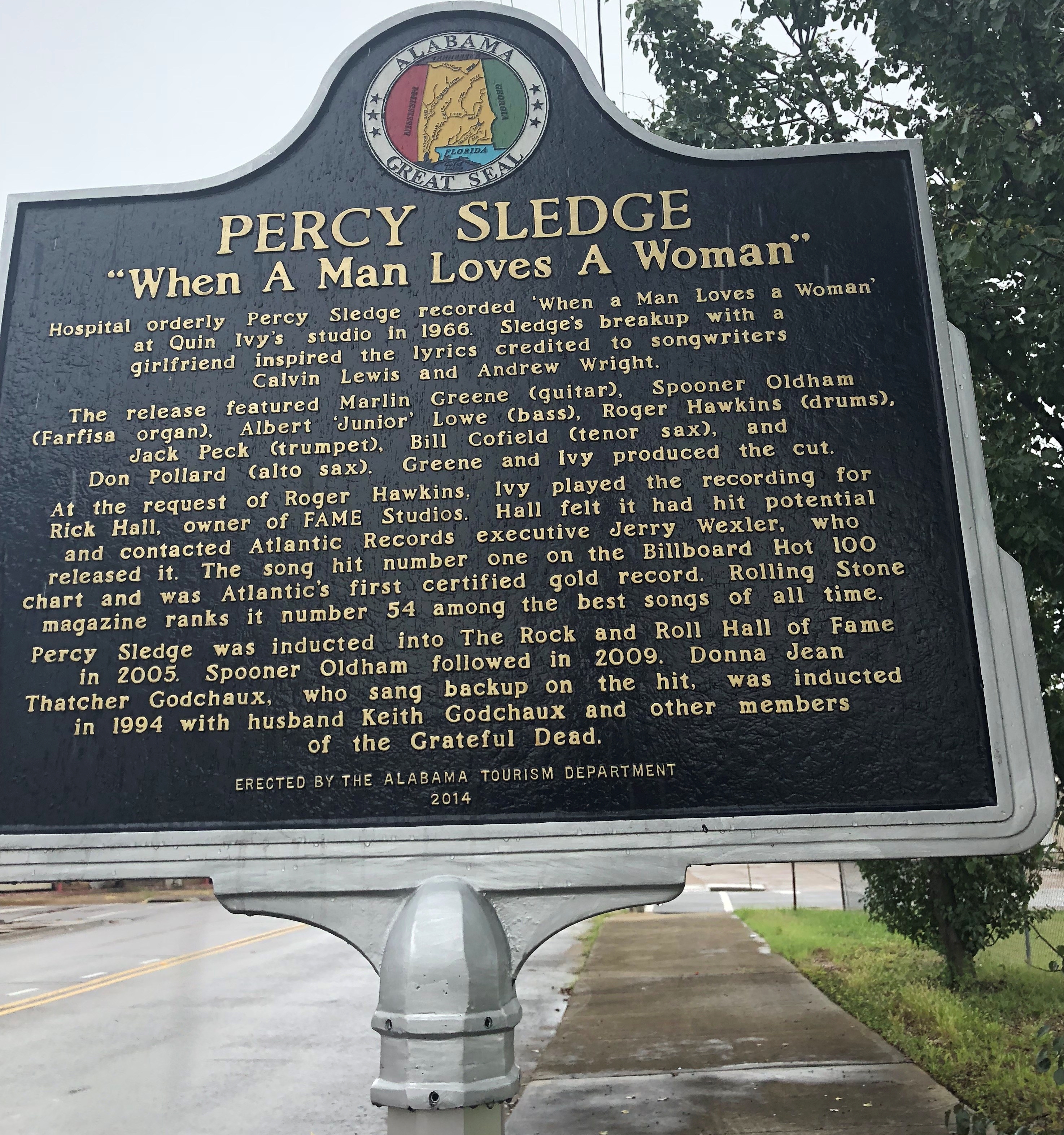
I was standing in the studio where Percy Sledge recorded “When a Man Loves a Woman.” I saw the sound booth where Wilson Pickett’s band recorded “Land of 1,000 Dances” and “Mustang Sally.” I instantly felt an energy and intense sense of being alive. I love those iconic songs.
One question that was asked “who do you listen to now?” He did not even hesitate, Jason Isbell. I made a note. Our guide passionately shared the story of Jason, his approach to writing and recording music. The whole story. It was very intriguing to me. In the different books, articles and documentaries I’ve read, I know that it is not always easy to keep control over your music career and still be financially successful. “Jason Isbell is the real deal.” After doing some quick listening and research, our guide was spot on.
We were nearing the end of the tour when a woman spoke up. She said “you know the trumpet that is slightly off-key at the end of ‘When a Man Loves a Woman’? That’s my Dad.” Everyone around her had their jaws collectively drop and hit the floor. My brain probably exploded a little bit too. She went on to say that when she was a little girl she saw the Osmonds and Liza Minelli record in that studio. Of course the tour guide thought that was nearly the best thing ever. As did we all.


Muscle Shoals did not disappoint! It was a tremendous opportunity. It was every bit the pilgrimage I envisioned it would be. I am certain I will be back.
The tour ended. Back in the car.
On to the next music city… Nashville.
 Heather L Cleary
Leave a comment